
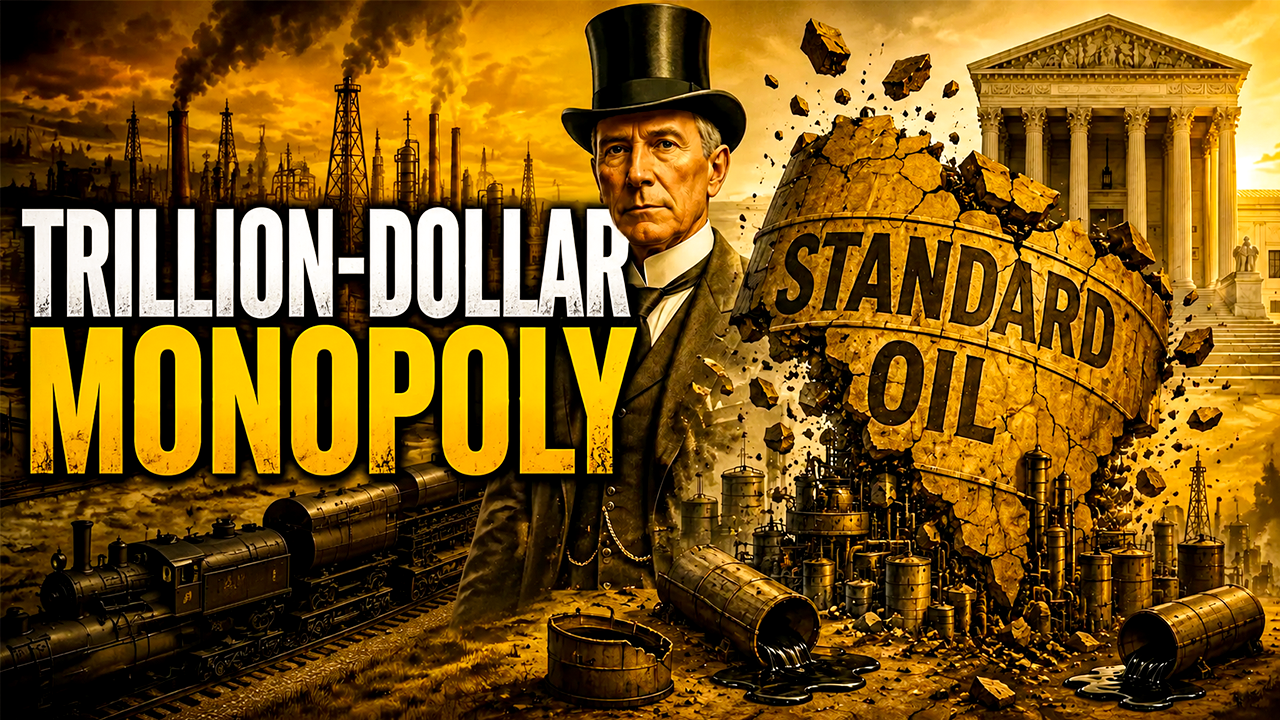
Discover how the biggest monopoly in history rose to absolute power, why governments destroyed it, and how its fall changed the global economy forever.
Thank you for reading this post, don't forget to subscribe!Why the Biggest Monopoly in History Was Destroyed
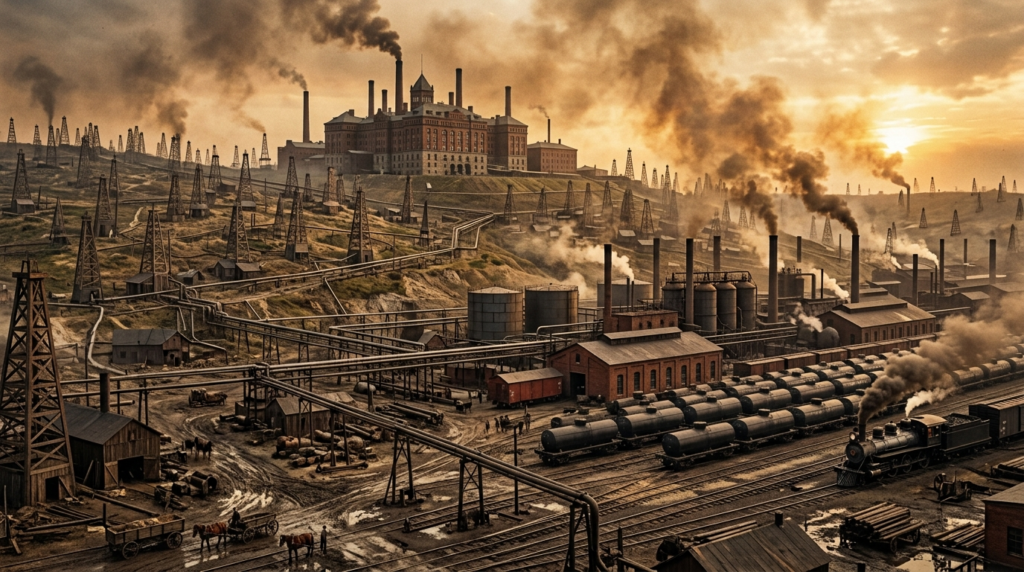
In 1904, one company made almost all U.S. oil. It had over 20,000 oil wells. It had 4,000 miles of pipes. It had many train tank cars. Its name was Standard Oil. It was so big. Its power was huge. It was the biggest monopoly in history.
Today, trust-busters look at Google, Amazon, Apple, and Meta. They ask: will history repeat? To know, learn how the biggest monopoly was built. See why it was destroyed. See what happened to the money when it fell. This is not just old news. It is a guide for stock buyers today.
How the Biggest Monopoly in History Started
John D. Rockefeller did not start oil refining. He started a small business in Cleveland in 1859. The oil market was wild then. Prices went up and down a lot. Rockefeller saw a way to bring order. He wanted to control the whole flow of oil.
In 1870, he started Standard Oil of Ohio. It had one million dollars. By 1880, it controlled about 90% of all U.S. refining. That fast growth is still a wonder. The secret was a legal trick called a trust.
The Trust Trick
State law said one company could not own stock in another. So Rockefeller’s lawyers made a trust in 1882. A group of men held the shares of many oil firms. Those firms looked separate. But the trust board ran them all as one. Stockholders got trust papers. They shared profits. This let Standard Oil control everything. It seemed like many small firms.
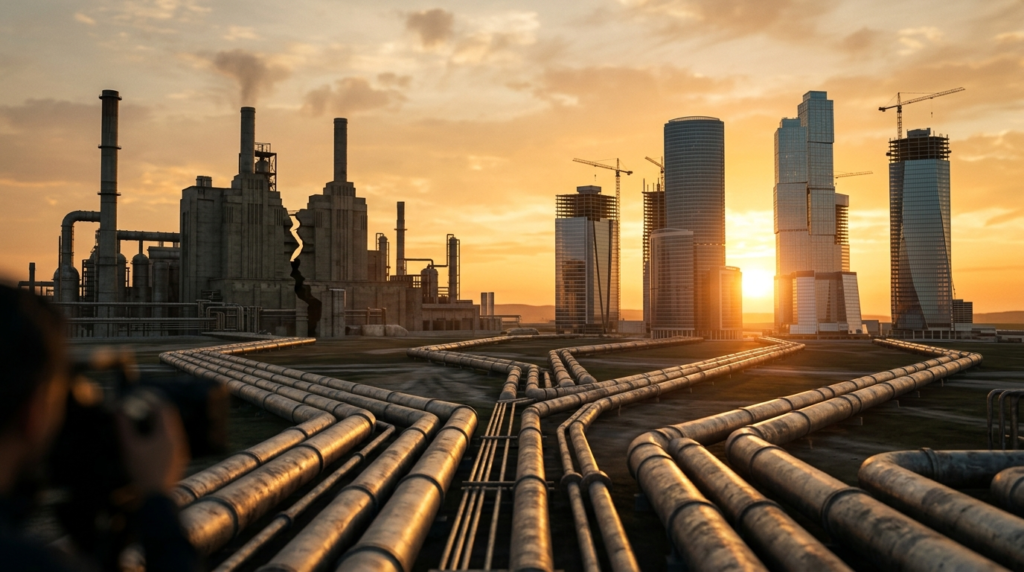
This was a smart money move. It cut waste. It gave power over rail and supply costs. The trust ran 14,000 miles of pipes. It had 100,000 workers. It sold oil all over the world.

How the Biggest Monopoly in History Crushed Rivals
How did Standard Oil use its power? It used hard math to kill rivals. It made it too costly for others to fight.
Price Wars to Kill Foes
Standard Oil would cut prices very low in a new town. It would lose money for a while. A small rival could not last. When the rival was weak, Standard Oil bought it cheap. If the rival said no, the price war went on. It went on until the rival went broke. Then Standard Oil bought the remains.
Secret Train Rebates
Railroads were the only way to move oil. Standard Oil got secret kickbacks. It paid less than the listed price. It also got a cut of what rivals paid to ship oil. A rival paid $1.25 a barrel to ship. Some of that cash went to Rockefeller. It was like a tax on rivals. This made it hard for any other firm to compete.
Owning Every Step
Standard Oil did not just refine oil. It owned the oil wells. It owned the pipes. It owned the tank cars. It owned the barrel shops. It owned the acid plants. It even owned the carts that sold oil to stores. By owning every step, it cut all the costs. Its low cost set the price floor. No one else could sell oil for less and stay alive. This was not a monopoly built on a patent. It was built on perfect control and low costs.
The Public Turns on the Biggest Monopoly in History
By 1900, Rockefeller had more money than anyone. But the public mood changed. People saw the trust as a bully.
Ida Tarbell’s Pen
The biggest hit came from a reporter. She was a woman named Ida Tarbell. Her father had lost his oil business to Standard Oil. In 1902, she wrote a long story for a magazine. She showed all the secrets. She showed the rebates, the price wars, the trust. Her facts were solid. The public got very angry. This anger pushed leaders to act.
The Progressive Push
People saw the biggest monopoly as a drain on free trade. President Teddy Roosevelt took office in 1901. He said there were good big firms and bad ones. Bad ones used unfair power. With Tarbell’s stories and state suits, Standard Oil was seen as bad.
The Law Comes for the Biggest Monopoly in History
The Sherman Act
In 1890, Congress passed a law against trade limits. It said any group that held back trade was illegal. For years, the law was weak. But by 1906, the Roosevelt team was ready. They had a report on Standard Oil’s secret rebates. They went to court.
The U.S. Sues
In 1906, the U.S. sued Standard Oil of New Jersey. It sued 70 other firms. They said the trust used illegal rebates. It used price wars and fake firms to keep a monopoly. The trial court agreed. In 1909, it ordered the company to break up. Standard Oil appealed to the top court.
The Supreme Court Breaks the Biggest Monopoly in History
The 1911 Ruling and 34 New Firms
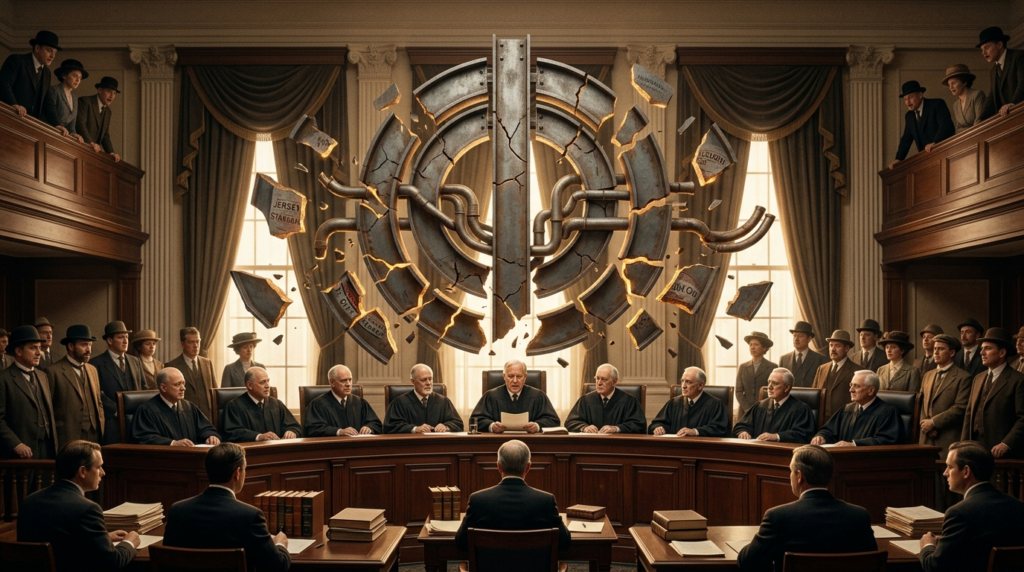
On May 15, 1911, the Supreme Court ruled. All nine judges said Standard Oil broke the law. The fix: the company had six months to split. It split into 34 separate firms. These new firms became famous names. For example, Standard Oil of New Jersey later became Exxon. Standard Oil of New York became Mobil. Standard Oil of California became Chevron. And many more. This was the biggest forced breakup in U.S. history.
The Big Irony: The Breakup Made More Money
For money people, this is the best part. The story says Standard Oil was destroyed. But the breakup made investors much richer.
Stock Prices Jump
One year after the split, the 34 new firms were worth far more. Together they were worth more than the old Standard Oil. The total value doubled in a few years. Why? Each new firm could grow on its own. They could chase new things like gas for cars. They could get new money without the old legal cloud. Rockefeller kept shares in all of them. He got even richer. He went from $300 million to $900 million. He gained wealth because the monopoly was split.
Unlocking Hidden Worth
The breakup showed a key money idea. A big combined firm can be worth less than its parts. The parts, set free, got higher price tags. This is called the “sum of parts” value. The 1911 split was the first great example. It was done by the court, not a fund manager.
Could Today’s Tech Firms Be the Next Biggest Monopoly in History?
Now it’s 2026. The term “biggest monopoly in history” is back. This time it’s about search, app stores, and social nets. This looks a lot like the oil trust.
Tech Giants Under Fire
In 2024, a judge said Google broke the law. Google kept a search monopoly. The U.S. may force Google to split. It may split search from its ad business. The FTC sued Amazon for harming rivals. Meta is on trial for buying Instagram and WhatsApp. They say it did so to stop threats. Apple is in trouble for its App Store rules. All these cases echo the Standard Oil case.
What History Teaches
The Standard Oil case gives three lessons for money watchers. First, the law moves slow. It took five years to the final ruling. Second, what the public thinks matters a lot. Tarbell’s work pushed Roosevelt. Today’s reports and hearings do the same. Third, a breakup is not always bad for stock owners. The parts can bloom. Holders can win big.
What This Means for Your Money
If you own shares in Alphabet, Amazon, Apple, or Meta in 2026, watch antitrust risk. But do not run in fear. The biggest monopoly in history shows that a split can reveal hidden worth. Think of a Google breakup. Search could be a steady cash cow. The ad-tech part might get a higher growth value. Together, they could be worth more than Alphabet now. The same thing happened when Standard Oil was cut into pieces.
Not every split is a win. AT&T’s breakup was mixed. But the pattern is clear. The biggest monopoly was not truly destroyed. It became a set of new giants. They ruled oil for a hundred years. Its “end” was really a grand rebuild. For those who can wait out the noise, that is a story to learn from.
Next time you hear “break up Big Tech,” do not just see a ruin. Picture Exxon, Chevron, and Marathon. They rose from the pieces of the biggest monopoly in history. The best wealth is not always in the whole empire. Sometimes it comes when the empire breaks apart.